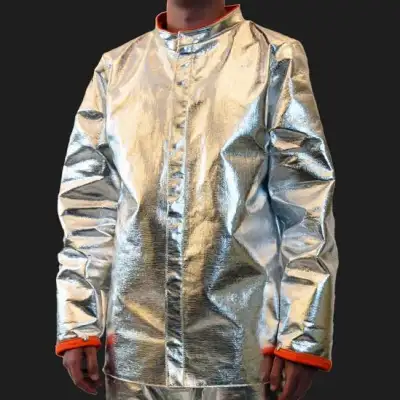
Aluminized Proximity Apparel for Head-to-Toe Heat Protection
In high-temperature industrial environments, thermal hazards rarely occur in isolation. Workers in foundries, steel mills, glass manufacturing facilities, industrial furnace operations, and specialized firefighting roles are often exposed to a combination of radiant heat, open flame, and molten metal splash, simultaneously and across the entire body. Protecting a single area while leaving others vulnerable is not an effective safety strategy.
Newtex Industries addresses this challenge by offering advanced aluminized clothing engineered for complete, head-to-toe protection. Designed to reflect intense radiant heat while providing thermal insulation and resistance to molten splash, these safety apparel solutions go beyond basic PPE to deliver integrated, full-body defense.
In this blog, we explore aluminized clothing solutions to support full-body heat protection across different industrial applications.
Importance of Aluminized Fabrics in Radiant Heat Protection
Radiant heat behaves differently from other forms of thermal exposure. It travels as electromagnetic energy, transferring heat directly to surfaces without requiring contact. In high-temperature environments, this means a worker can experience rapid heat gain even without touching a hot object.
To manage this risk effectively, fabrics must do more than resist heat; they must control how it interacts with the garment surface.
Aluminized fabrics are specifically engineered for this purpose. By incorporating a metallic reflective layer, these materials redirect a large portion of incoming radiant energy away from the wearer. This reduces the amount of heat absorbed by the garment and slows the rate at which temperature builds on the inside.
Performance of Aluminized Protection Materials:
Performance is not based solely on reflection. Effective protection comes from how the material is built and how it handles heat:
Radiant heat reflection: The outer aluminized surface reflects a large portion of radiant heat before it reaches the fabric.
Thermal insulation: The base fabric structure helps trap air, limiting heat transfer toward the body.
Heat transfer delay: Layered constructions reduce the rate of heat transfer, extending the time before internal temperatures reach unsafe levels.
Tip: Aluminized fabrics are evaluated using recognized test methods such as ASTM F1939 (radiant heat resistance) and ISO 6942 (radiant heat exposure), helping validate their performance in high-temperature industrial environments.
Aluminized Clothing for Full-Body Protection in Radiant Heat Environments
Newtex Industries offers aluminized safety apparel covering all key protection areas, including hoods, jackets, sleeves, gloves, aprons, boot covers, pants, and full-body suits, designed to address different levels and zones of radiant heat exposure in industrial environments.