How Does Heat Flux Relate to the Performance of High-Temperature Insulation Fabrics?

In high-temperature industrial environments, safety and material performance depend on more than just knowing how hot a surface or process is. Furnaces, kilns, molten metal operations, and petrochemical systems often operate at extreme temperatures, yet temperature alone does not define the level of thermal risk. 

What truly determines how heat affects people, equipment, and insulation systems is how much heat energy is transferred and how fast that transfer occurs. This is where heat flux becomes an essential concept to understand. Let’s explore what heat flux means in practical terms and how it directly influences the performance of high-temperature insulation fabrics in industrial environments.

What Is Heat Flux?

Heat flux is the rate of heat transfer through a given area. In simple terms, it describes how much heat is moving across a surface over time. Unlike temperature, which is a measure of how hot something is at a single point, heat flux focuses on the movement of heat from one place to another.

In industrial environments, heat is constantly moving from hotter surfaces to cooler ones. The intensity of this movement depends on the temperature difference between surfaces and the properties of the materials between them. A high heat flux means heat energy is transferring quickly, creating a greater risk of burns, material degradation, or equipment failure. A lower heat flux means heat transfer is slower and more manageable.
Heat Flux Units

Heat Flux Units and Industrial Measurement

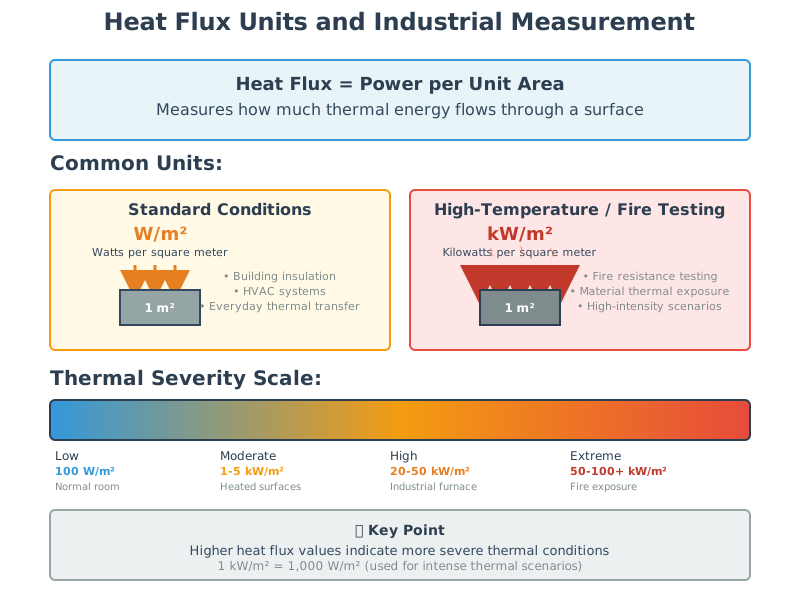
Heat flux is commonly expressed as power per unit area, most often in watts per square meter. In high-temperature and fire-exposure testing, kilowatts per square meter are frequently used to represent intense thermal conditions.

These heat flux units help quantify how severe a thermal exposure is. 

How Heat Flux Affects the Performance of High-Temperature Insulation Fabrics?

Heat flux determines how much thermal energy insulation fabrics must manage and how quickly they must manage it. As heat flux increases, fabrics heat up faster, degrade faster, and reach their performance limits sooner, directly impacting protection, durability, and service life. Let’s go through in detail:

1. Thermal Barrier Effectiveness

Heat flux directly challenges a fabric's ability to insulate. Higher heat flux means more thermal energy attempting to pass through the material per unit time. When heat flux exceeds the fabric's insulation capacity, the cold side temperature rises rapidly, reducing protection effectiveness. 

Materials with lower thermal conductivity maintain better performance under high heat flux by slowing heat transfer and keeping the protected surface cooler.

2. Temperature Rise and Material Limits

Heat flux determines how quickly a fabric heats up and reaches its temperature limits. Think of it this way: a fabric rated for 1000°F doesn't fail at that ambient temperature; it fails when heat flux is so intense that the fabric itself exceeds 1000°F.

Every insulation fabric has two key limits:

  • Continuous operating temperature: The maximum temperature the fabric can withstand during prolonged exposure

  • Peak temperature threshold: The maximum temperature the fabric can handle for brief periods

Higher heat flux causes the fabric to reach these temperature limits faster. Even a fabric rated for extreme temperatures can fail quickly if exposed to intense heat flux that rapidly drives the material temperature beyond its rated limits.

Example: A fabric rated for 1500°F continuous use can handle moderate heat flux indefinitely. But if exposed to extreme heat flux (like direct flame at 50+ kW/m²), the fabric itself may heat up past 1500°F within seconds, causing immediate failure.

3. Material Degradation Rate

Heat flux accelerates the thermal aging process of insulation fabrics. Higher heat flux exposure leads to:

  • Faster fiber breakdown: Chemical bonds in the material weaken more rapidly

  • Loss of mechanical strength: Tensile strength and tear resistance decline over time

  • Coating deterioration: Protective coatings may crack, flake, or decompose

  • Dimensional changes: Materials may shrink, warp, or become brittle

High heat-resistant fabric materials that last years under low heat flux conditions may fail in months or weeks when exposed to significantly higher heat flux.

Heat Distribution in Insulation Fabrics

4. Heat Distribution and Hot Spots

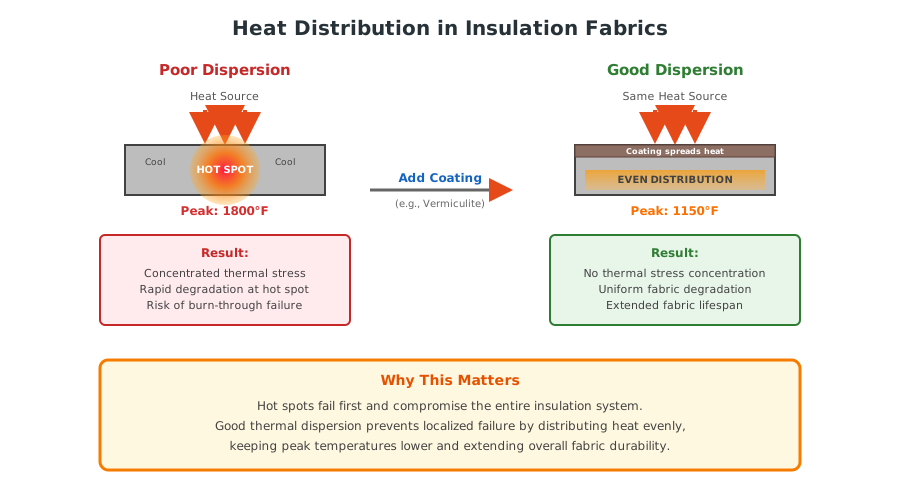
Uneven heat flux creates localized hot spots where thermal stress concentrates, leading to accelerated degradation in those specific areas compared to the surrounding material.

These hot spots present a higher risk of burn-through or mechanical failure, becoming potential weak points that can compromise the overall insulation performance of the entire fabric system. 

Fabrics with good thermal dispersion properties, such as vermiculite-coated materials, effectively spread heat flux more evenly across the surface, reducing hot spot formation and improving overall durability and longevity.

Tip: If you're dealing with high temperatures in your industry and need to protect your workers, machinery, or equipment from extreme heat and hot spot failures, consider Newtex Industries for proven thermal protection solutions. Newtex offers high-temperature textiles with over 20 standard coatings, including a proprietary vermiculite, specifically designed for superior heat dispersion and durability in demanding industrial environments.

5. Thermal Stress and Mechanical Performance

High heat flux creates significant thermal stress that directly affects the fabric's mechanical properties in several ways. As heat flux increases, materials tend to become stiffer and harder to work with, losing the flexibility needed for installation and conforming to complex shapes. 

Fluctuating heat flux causes repeated thermal expansion and contraction cycles, creating dimensional changes that can stress seams, fasteners, and attachment points over time. Additionally, repeated exposure to varying heat flux levels leads to cumulative fatigue damage that progresses faster than that from constant, steady exposure. 

This mechanical degradation is particularly critical for removable insulation blankets and safety apparel, which must remain flexible, durable, and easy to handle despite ongoing thermal exposure in demanding industrial environments.

6. Multi-Layer System Performance

In multi-layer insulation systems, heat flux affects each layer differently. Each layer plays a specific role in managing thermal exposure:

Layer Position

Layer Type

Primary Function

Key Performance Factor

Outer Layer

Flame barrier; Environmental barrier (oil, liquid); or Reflective Layer (e.g., aluminized film)

Prevents flame penetration, and or oil, liquid, etc. First defense against Conductive, Convective, and Radiant. When aluminized fabric is used, it reflects RADIANT heat flux

Reduces thermal burden on inner layers, handles the highest temperatures

Middle Layer

Insulating Layer (e.g., textured fiberglass, ceramic fiber)

Slows CONDUCTIVE heat transfer

Creates a thermal barrier, prevents rapid heat penetration

Inner Layer

Protective Layer (e.g., base fabric, comfort liner)

Handles residual heat flux, provides comfort and often wicking capability

Must maintain integrity despite sustained lower-intensity heat exposure

Newtex Industries designs multi-layer insulation systems combining reflective Z-Flex® aluminized barriers with insulating Zetex® fabrics to create optimized thermal protection. Each layer is selected based on the specific heat flux profile of your application, ensuring maximum protection and durability.

7. Exposure Duration Multiplier Effect

The impact of heat flux compounds over time. A fabric might withstand:

  • 50 kW/m² for 60 seconds without damage

  • 25 kW/m² for several minutes before degradation begins

  • 10 kW/m² continuously for extended periods

The same heat flux level becomes more destructive with longer exposure duration. This means applications with continuous high heat flux require more robust materials than those with brief, intermittent exposure, even at the same intensity.

Related Articles - 

How Fabric Weave Patterns Influence Heat Resistance?

High Temperature Fire Retardant Coating and Common Applications

What is Heat Cleaning for Industrial Textiles?

Conclusion

Heat flux acts as the "threat” that insulation systems must defend against. Just as structural materials have weight limits, thermal insulation materials or multilayer systems have heat flux limits. Exceeding these limits, whether through intensity, duration, or both, leads to compromised performance and eventual failure. Matching fabric capabilities to actual heat flux conditions ensures reliable protection and optimal service life.

Contact Newtex Industries today Our technical team can assess your heat flux environment and recommend the optimal fabric solution.
Published: February 12, 2026
Categories: Stories