When working in high-temperature environments, such as foundries, aircraft rescue operations, or industrial furnaces, selecting the right thermal protective gear can be the difference between safety and catastrophe.
Two of the most advanced categories of fire protective apparel are Fire Entry Suits and Fire Proximity Suits.
Their design, performance, and intended use differ significantly. This article breaks down these differences in detail, helping safety engineers, specifiers, and industrial professionals make informed choices for their applications.
What Are Fire Entry Suits?
A Fire Entry Suit is engineered to withstand direct exposure to flames, including short-duration total fire engulfment or flashover conditions. These specialized ensembles offer the highest level of thermal protection available, enabling personnel to perform emergency operations in the most extreme heat environments.
They are built with multiple layers of insulation and reflective materials to resist radiant, convective, and conductive heat. The outer shell typically features aluminized glass fabric, which reflects radiant energy away from the wearer, while the inner layers provide insulation and comfort.
Because of their heavy insulation and limited mobility, fire entry suits are designed for short, emergency operations, such as rescue work, fire suppression, or handling severe thermal incidents.
What Are Fire Proximity Suits?
A Fire Proximity Suit is designed for scenarios where operators must work near high heat sources, but not in direct contact with flames. Its primary purpose is to reflect intense radiant heat, allowing personnel to work safely in proximity to furnaces, molten metal, or aircraft fuel fires.
These fire-retardant suits are lighter, more flexible, and more comfortable than fire entry suits, making them ideal for extended operations that demand both protection and mobility.
Proximity suits are commonly used in metalworking, foundries, glass manufacturing, and aircraft rescue and firefighting (ARFF) - anywhere radiant heat exposure is a major risk but direct flame contact is not.
How Newtex Industries Redefines Thermal Protection?
Newtex Industries has long been a leader in developing high-temperature fabrics and advanced fire protection solutions for demanding industrial and emergency environments. Our products are trusted by professionals who operate in extreme heat - from furnace maintenance to live-fire rescue operations.
The Newtex X Series marks a new era in fire protective apparel, redefining performance through material science, ergonomic design, and real-world testing. These suits combine our proprietary Z-Flex® aluminized technology with advanced insulation systems to deliver unmatched protection, comfort, and reliability.
Newtex Fire Entry Suits:
When operations demand direct exposure to flames or flashover conditions, Newtex Fire Entry Suits provide the highest level of protection possible. Engineered for short-duration, high-intensity emergencies, these suits shield personnel through multi-layer insulation systems and Z-Flex® aluminized outer shells that reflect 95% of radiant energy.
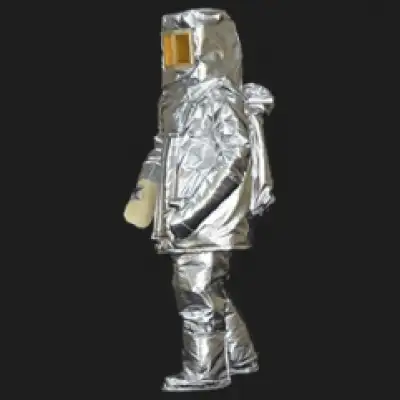
A. X50 Z-Flex® Fire Entry Suit: Designed for rapid response under extreme fire conditions, the X50 features a multi-layer insulation system with a Z-Flex® aluminized outer shell. It ensures superior radiant heat reflection, flame resistance, and durability during critical operations.

B. X60 Z-Flex® Ultra Fire Entry Suit: The most advanced fire entry ensemble available, the X60 offers ultimate protection during full flame engulfment scenarios. It is built for total defense during high-risk interventions, industrial maintenance, and rescue operations.
Why Industries Choose Newtex Fire Entry Suits?
Temperature Resistance: Up to 3000°F (1650°C)
Proven Material: Advanced Z-Flex® aluminized fabric reflects 95% of radiant energy
Design & Comfort: Optimized mobility for rapid emergency response
Applications: Kiln maintenance, foundry rescue, furnace inspection, and live-fire demonstrations.
Newtex Fire Proximity Suits:
For operations near, but not inside, flames - Newtex Fire Proximity Suits provide the ideal balance of heat protection, flexibility, and comfort. Constructed with Z-Flex® II aluminization and premium Zetex® fiberglass, these suits are built to reflect radiant heat while maintaining lightweight mobility for extended use.

A. X10 Ultra-Lite Proximity Suit: A single-layer aluminized jacket and pants ensemble, ideal for light furnace work or metal pouring tasks requiring agility and moderate thermal protection.

B. X20 Lightweight Proximity Suit: Combines Z-Flex® II A-601 texturized fiberglass with a flame-resistant cotton liner, offering comfort, flexibility, and dual-layer protection for foundry and maintenance environments.

C. X30 Industrial Proximity Suit: Engineered with multiple layers, including a premium quilted Nomex® thermal barrier, the X30 provides advanced radiant heat reflection and longer working durations - perfect for industrial firefighting, ARFF, and furnace operations.
Each proximity suit is engineered to reflect up to 95% of infrared radiation, providing exceptional defense against radiant heat. These suits are designed for effectiveness in environments reaching up to 2000°F (1093°C), combine lightweight construction with durable materials for enhanced mobility and comfort.
Their advanced design ensures reliable performance across demanding applications, including furnace and foundry work, aircraft rescue and firefighting (ARFF), heat inspection, and emergency response operations.
Newtex Insulated Maintenance Suits (Kiln & Oven Suits):
For industrial environments where equipment must remain at elevated temperatures during servicing, our Insulated Maintenance Suits provide the perfect balance of protection, comfort, and mobility.
These suits are engineered for hot maintenance operations on tanks, furnaces, kilns, and similar vessels, allowing personnel to perform essential tasks without initiating costly cool-down cycles that can lead to thermal shock or thermal cycling of the equipment.
Built on the same proven design platform as the X50 Fire Entry Suit, these suits incorporate specialized enhancements such as ZetexPlus® knee pads for kneeling on hot surfaces and multi-layer insulation systems for extended exposure protection. The result is a suit optimized for durability, flexibility, and long-duration comfort in high-heat environments.

A. X40 Insulated Suit: A mid-weight aluminized suit featuring a fiberglass insulation layer and Nomex® thermal barrier. Designed for operators who require sustained protection up to 3000°F (1650°C) while maintaining freedom of movement for routine maintenance work.

B. X50 Kiln Suit: A well-insulated aluminized ensemble specifically engineered for kiln and furnace maintenance. It provides the highest level of protection within the maintenance category, combining exceptional thermal insulation with reinforced construction for demanding service conditions.
Fire Entry Suit vs. Fire Proximity Suit: The Newtex Difference
|
Feature |
Fire Entry Suits |
Fire Proximity Suits |
|---|---|---|
|
Primary Purpose |
Direct exposure to flames or flashover |
Protection from radiant heat near fire |
|
Exposure Type |
Flame engulfment, molten metal splash |
Radiant and convective heat exposure |
|
Outer Fabric |
Z-Flex® Aluminized Glass Fabric |
Z-Flex® II Aluminized Zetex® Fabric |
|
Construction |
Multi-layer insulation system |
Single or multi-layer (depending on model) |
|
Mobility |
Limited, designed for short-duration use |
High, suitable for extended operations |
|
Typical Applications |
Fire entry, kiln maintenance, and emergency rescue |
Foundries, ARFF, furnace work, metal pouring |
The Technology Behind Z-Flex® & Z-Flex® II Aluminized Fabrics
The performance difference in Newtex’s suits stems from its proprietary Z-Flex® and Z-Flex® II aluminized fabric technologies. These multi-layer materials combine high-reflectivity aluminum coatings with durable glass or aramid base fabrics, engineered for optimal thermal resistance.
How It Works:
Reflective Layer: The aluminized surface reflects radiant heat away from the body.
Insulative Core: Layers of texturized fiberglass or Nomex® trap air, reducing conductive heat transfer.
Comfort Liner: Flame-resistant inner liners wick away moisture and maintain wearer comfort during operations.
These fabrics have been tested extensively and consistently outperform competitive aluminized materials in radiant heat reflection, abrasion resistance, and long-term durability.
Explore heat-resistant textiles here!
Related Articles -
What Makes Fiberglass Fabric Ideal for Heat and Fire Protection?
Best Heat-Resistant Fabrics for Industrial Applications
Conclusion
Both fire entry suits and fire proximity suits play vital roles in high-temperature safety. Fire entry suits are built for direct flame contact and flashover, while proximity suits protect against radiant heat in nearby operations. Choosing the right suit depends on exposure type, duration, and mobility needs - ensuring workers stay safe, efficient, and protected in extreme heat environments.
Contact us today
for expert guidance on selecting the right thermal protective gear for your application. Our team is here to help you find the safest, most effective solution.